On the night of March 11, 2011, what should have been an ordinary closing shift at a Lululemon store in Bethesda, Maryland, turned into one of the most shocking retail murder cases in modern American history. The case, later known nationwide as the “Lululemon murder,” began over something as seemingly small as a stolen pair of leggings, but ended in a level of brutality that stunned investigators, the media, and the public.
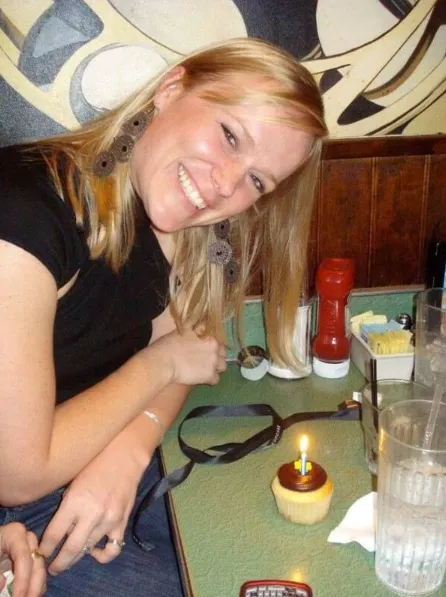
Jayna Murray, a 30-year-old graduate student at Johns Hopkins University, worked part-time at Lululemon while pursuing her MBA. She was described by those who knew her as ambitious, intelligent, and deeply driven. Her co-worker, Brittany Norwood, 29, worked alongside her at the upscale Bethesda Row location. By all outward appearances, there had never been any major conflict between the two women.
That changed on the evening of March 11.
Both women were working the closing shift. As part of store policy, employees were required to check one another’s bags before leaving to prevent internal theft. During this routine check, Jayna discovered a pair of unpaid leggings inside Brittany’s belongings.
That moment would become the turning point.
At approximately 9:45 p.m., the two women left the store. Just six minutes later, Jayna called a store manager to report what she had found. Soon afterward, Brittany contacted Jayna and claimed she had accidentally left her wallet inside the store and needed to go back to retrieve it.
Trusting her co-worker, Jayna returned with Brittany at around 10:05 p.m.
Within moments of re-entering the store, employees at the neighboring Apple store began hearing disturbing noises coming from next door. One employee later recalled hearing a woman’s voice pleading, “Don’t do this. Talk to me. What’s going on?” This was followed by loud shouting, grunting, and sounds of a violent struggle that reportedly lasted around ten minutes.
Later, the same voice cried out, “God help me, please help me.”
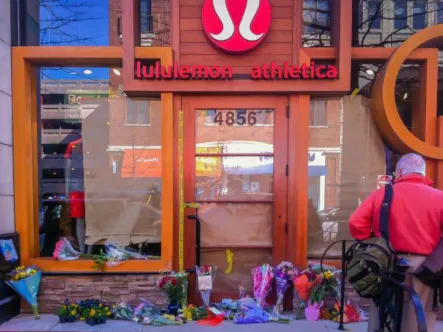
Tragically, no one called the police. Those nearby believed it was simply a heated argument or personal drama.
The next morning, the store manager arrived to open the shop and was met with a horrific scene.
Jayna Murray was found face-down in a massive pool of blood in the back of the store.
In the bathroom, Brittany Norwood was discovered bound with zip ties, appearing traumatized and barely responsive.
At first, Brittany presented herself as a victim.
She told police that when she and Jayna returned to the store, two masked men had slipped in behind them. According to her story, the men sexually assaulted both women, murdered Jayna, and then tied Brittany up before fleeing.
Initially, police treated the case as a double assault and homicide investigation involving outside suspects.
But investigators quickly began noticing problems.
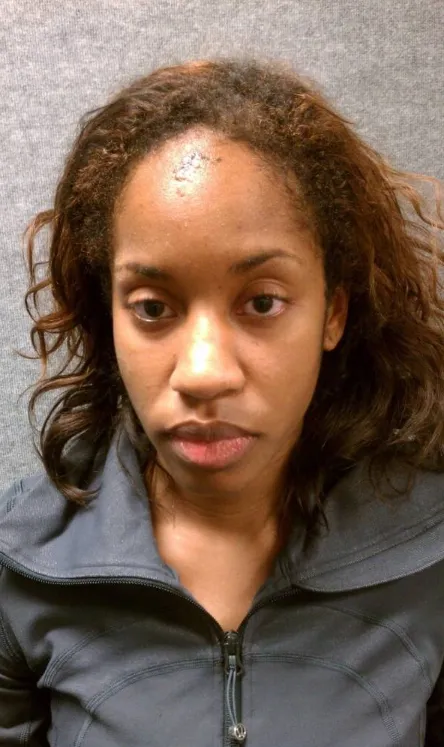
Her story changed repeatedly during questioning. Details shifted with each interview. More importantly, physical evidence at the scene did not support her version of events.
Blood evidence became one of the first major cracks in her story.
Although Brittany claimed she had never been inside Jayna’s car, detectives found Brittany’s blood on the door handle, steering wheel, and gear shift.
That contradiction immediately raised suspicion.
As detectives dug deeper, the truth that emerged was far more horrifying than the original story.
Medical examiners later testified that Jayna Murray had suffered 331 separate injuries.
The attack was unimaginably brutal.
She had wounds caused by at least five different weapons, including a hammer, knife, box cutter, rope, and even a merchandise peg from inside the store.
Her face and skull had been severely battered.
The fatal wound was a stab wound to the back of her neck that severed her spinal cord and extended into her brain, leaving her unable to defend herself in her final moments.
The violence was so severe that Jayna’s family was unable to have an open-casket funeral.
According to prosecutors, after murdering Jayna, Brittany left the store and drove Jayna’s car to a parking lot several blocks away. She then sat there for approximately 90 minutes, trying to figure out how to cover up the crime.
What followed was an elaborate attempt to stage the scene.
Brittany returned to the store and stole cash from the registers to make it appear as though a robbery had occurred.
She then cut her own forehead to create the appearance of being attacked.
She sliced Jayna’s clothing to suggest sexual assault.
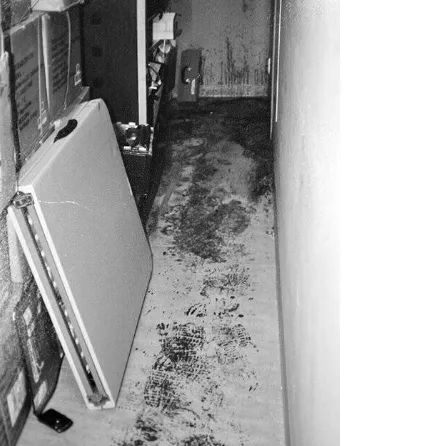
She even put on a pair of size 14 men’s shoes, stepped in Jayna’s blood, and walked around the store to create false footprints that would support the story of male intruders.
Finally, she zip-tied her own hands and feet and waited in the bathroom until morning.
As the investigation continued, detectives also uncovered Brittany’s troubling history of theft and deception.
Former friends and acquaintances described her as someone who had stolen money and clothing in the past. Some even referred to her as a compulsive liar and kleptomaniac.
At trial in January 2012, Brittany’s defense team did not deny that she had killed Jayna.
Instead, they argued that the murder was not premeditated and claimed it was a crime of passion rather than a planned killing.
The prosecution, however, painted a different picture.
They argued that Brittany had been caught stealing, panicked over the possibility of losing her job and reputation, and then deliberately chose to silence the only witness.
The jury did not hesitate.
Brittany Norwood was found guilty of first-degree murder and sentenced to life in prison without the possibility of parole.
The Lululemon murder remains one of the most disturbing true crime cases in recent American history, not only because of the sheer brutality of the attack, but because it began over something so shockingly small.
A single stolen pair of leggings.
What started as a routine bag check ended in a meticulously staged murder scene, a life lost, and a crime so vicious that it continues to haunt those who followed the case.
To this day, the name Jayna Murray remains tied to a tragedy that serves as a chilling reminder of how quickly an ordinary moment can turn into unimaginable violence.