A 17-Year-Old Spoke Up About Abuse — Then Was Silenced Forever
On the morning of February 6, 2023, 17-year-old Isabella Scavelli did something that takes a level of courage many adults never find in their lifetime.
She went to the Hernando County Sheriff’s Office with her mother and told authorities that she had been sexually assaulted by Lenard White.

At just 17, Isabella was a high school junior in Brooksville, Florida. She was active in tennis, involved in ROTC, and known as a disciplined, driven young woman with dreams of joining the military after graduation. She had a future already beginning to take shape — classes, plans, ambitions, and the quiet confidence of someone moving toward adulthood.
But in those final hours before everything was stolen from her, prosecutors would later say Isabella showed something even greater than ambition.
She showed extraordinary bravery.
Speaking up about abuse is never easy.
For a teenager, it can feel almost impossible.
There is fear.
Fear of not being believed.
Fear of retaliation.
Fear of what comes next.
Yet Isabella still chose to tell the truth.

That decision should have been the beginning of protection.
Instead, according to federal prosecutors, it became the reason her life was targeted.
Less than 48 hours later, on the night of February 7, just before midnight, someone came to the family’s front door.
It was a moment that began quietly.
A knock.
A door opening.
Then gunfire exploded into the home.
According to prosecutors, Isabella tried to run.
She was not standing still.
She was fleeing for help.
But the bullet that killed her struck her in the back as she ran.
Her mother was also shot and seriously wounded.
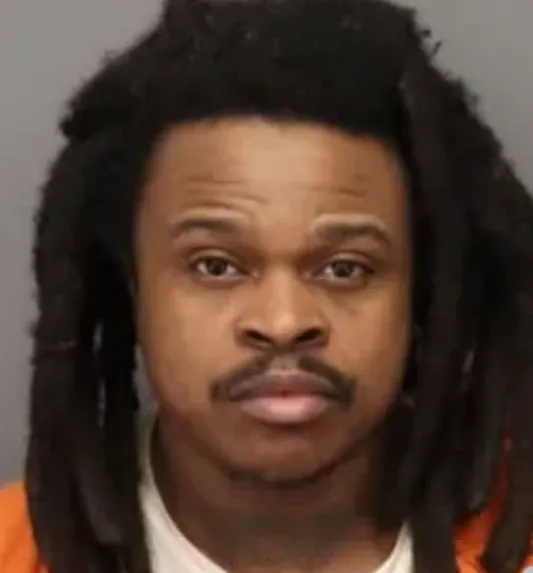
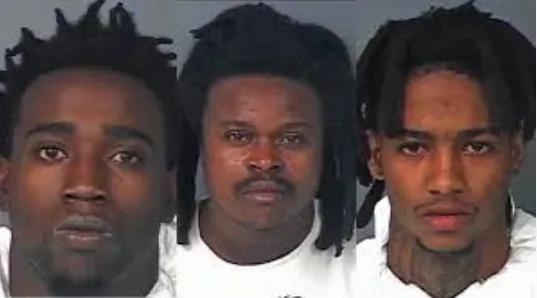
What had begun as a teenage girl finding the courage to report sexual violence ended in bloodshed inside the very place she should have been safest — her own home.
The horror of Isabella’s case is not only in the violence itself.
It is in what prosecutors say motivated it.
This was not random.
This was not a robbery.
This was not a spontaneous act.
Federal prosecutors described it as a murder-for-hire plot designed to silence a witness before she could testify.
That truth makes the case especially chilling.
A teenage girl used her voice.
And according to the evidence later presented in court, that voice became the reason men allegedly decided she had to die.
Authorities said Lenard White learned that Isabella had gone to police and moved quickly to protect himself.
Instead of facing the accusations, prosecutors said he began planning retaliation.
According to court records, White allegedly offered money to have Isabella killed and then left Florida for Georgia in an attempt to create an alibi.
Investigators said this was not panic.
It was preparation.
A deliberate plan.
That is what makes the case feel so cold.
This was not violence born in a moment of rage.
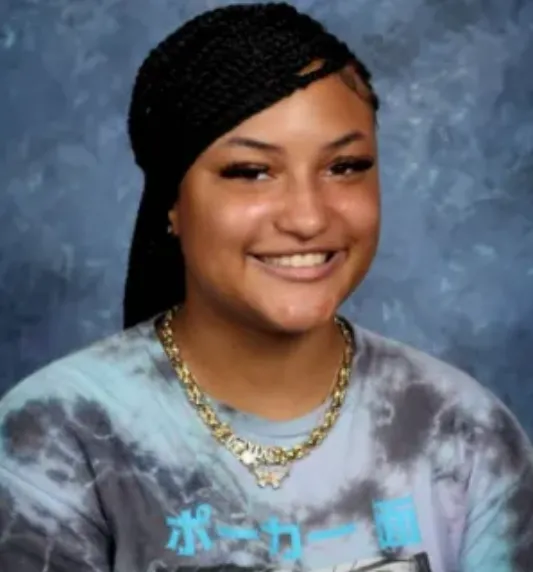
Prosecutors argued it was organized, calculated, and carried out with the sole purpose of preventing a 17-year-old girl from speaking in court.
Authorities said White enlisted his cousin, Sheldon Robinson, to help carry out the killing.
According to investigators, Robinson then brought in another man, Keshawn Woods.
Prosecutors later said Woods was offered money and cocaine to assist with what was chillingly described as a “clean-up job.”
That phrase alone reveals the cruelty at the center of this case.
Because Isabella was not something to be cleaned up.
She was a daughter.
A student.
An athlete.
A teenager with dreams and plans.
She should have been thinking about school, friends, ROTC, tennis matches, and graduation.
Instead, according to prosecutors, men allegedly saw her as a threat because she had told the truth.
As investigators began reconstructing what happened, the case quickly expanded beyond a single shooting.
Federal authorities, alongside the Hernando County Sheriff’s Office and the Bureau of Alcohol, Tobacco, Firearms and Explosives, began uncovering what prosecutors described as a wider conspiracy involving murder-for-hire, witness tampering, obstruction, and destruction of evidence.
According to prosecutors, the murder weapon was later found buried in Robinson’s yard.
That discovery became one of the major pieces of physical evidence in the case.
But the investigation did not stop there.
Authorities said the men involved also attempted to interfere with the investigation by misleading law enforcement and disposing of evidence.
Even after Isabella was gone, the effort to hide the truth continued.
That detail makes the case even more devastating.
Because it suggests that after a teenage girl was killed in her own home, there were still efforts to protect those responsible instead of acknowledging what had happened.
Woods eventually pleaded guilty and later cooperated with investigators.
In February 2026, he was sentenced in federal court to 17 years in prison for his role in the crime.
His cooperation became a key part of the prosecution’s case against White and Robinson.
By late October 2025, both men had been convicted in federal court on charges including murder-for-hire, witness tampering, and obstruction tied to Isabella’s killing.
But the tragedy did not end with the immediate suspects.